
Why Are Rainbows Circular
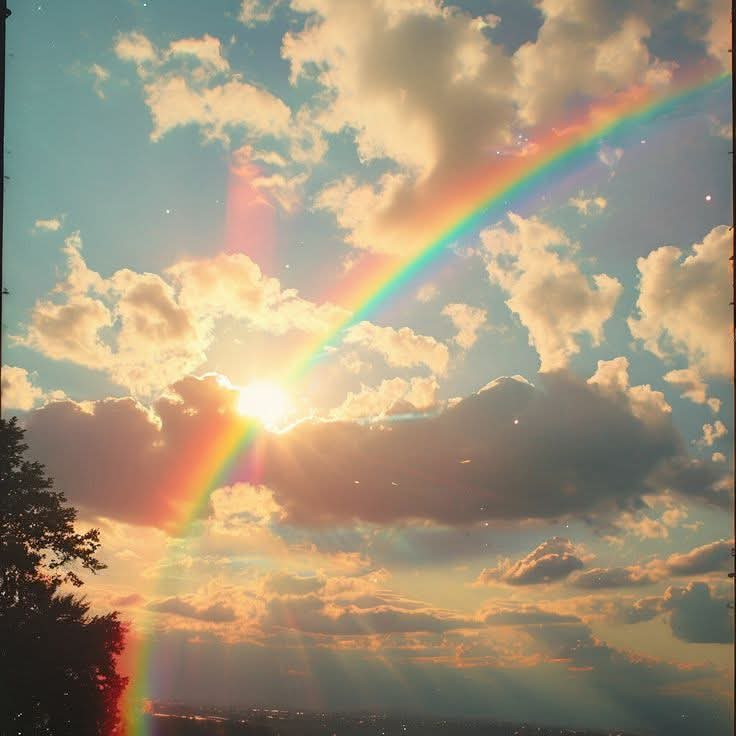
When you see a rainbow after the rain, it always appears as a curved arc. It never forms a square, triangle, or straight line. The physics of optics and the spherical shape of raindrops control this process. Specific geometric angles also determine what you see in the sky.
Here is the scientific explanation behind the circular shape of rainbows.
How Sunlight Interacts With Raindrops
Let’s examine what happens when sunlight enters a single droplet of water.
First, light bends as it enters the water drop. Scientists call this refraction. Next, the water splits white sunlight into different wavelengths. This dispersion creates distinct colors.
After splitting, light reflects off the inner wall of the droplet. Finally, the light bends once more as it exits the raindrop and reaches your eyes.
The 42-Degree Angle of Light
Light exits a raindrop at a specific angle relative to incoming sunlight. Red light exits at an angle of 42 degrees. Meanwhile, violet light exits at 40.5 degrees.
Because of this angle, you only see a rainbow when the light aligns with your eyes. The center of this pattern sits directly opposite the sun. Scientists call this point the anti-solar point.
Why a Cone Shapes the Rainbow
Imagine holding a flashlight directly behind your head. All the points in space that form a 42-degree angle with your eyes form a 3D cone.
The base of this cone forms a circle in the sky. Because you need a 42-degree angle to view the colors, the light naturally creates a circular shape.
Raindrops are spherical, so they scatter light evenly in all directions. A square or straight rainbow would require flat raindrops. However, physics prevents water drops from forming flat shapes in the air.
Why Rainbows Appear as Arcs
Rainbows are full circles, but we usually see only an arc. This happens because the ground blocks your view.
For a full circle to appear, water droplets must exist below your eye level. On flat ground, the Earth blocks the bottom half of the circle.
The sun’s position also affects the arc. When the sun sits low near the horizon, the arc rises higher. If the sun climbs higher than 42 degrees, the rainbow disappears below the horizon.
However, pilots can often view a full 360-degree circular rainbow from an airplane!