


Remembering the Humans Behind Early Telephone Exchanges: The Lost Art of Connection
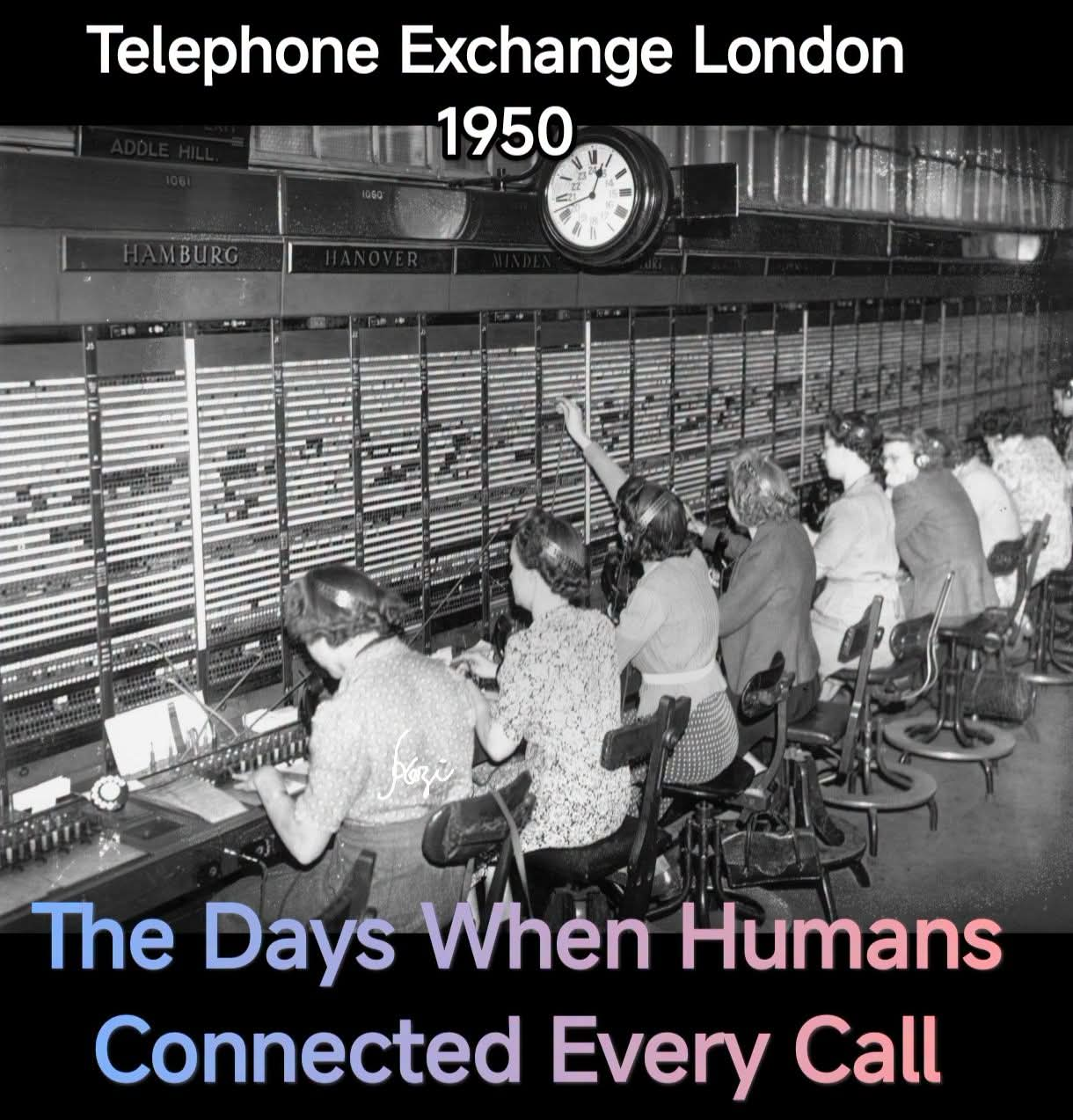
There was a time when making a phone call didn’t mean tapping on a slab of glass.
Imagine if you could travel back in time to the early 20th century, at a busy telephone exchange in London. You raise the weighty earpiece of a rotary phone and – before long – a steady, soothing voice answers from the other end:
”Which number, please?”
What ensued was a hushed, nearly balletic waltz of human hand-to-eye perfection.
The Magic Behind Switchboards in the History of Telephone Exchange
Before the operator was a large, towering switchboard with hundreds of little brass sockets and a maze of hanging cords.
You gave them the number you wanted, they did a careful hunt for the appropriate socket to visit, unplugged one end of a patch cord and placed it inside an alternate socket.
A couple of copper wire and a little work, and just like that, two voices thousands of miles away from one another were sounded together as real in the physical world.
Humans Need to Connect Before We AutomateToday we press a name on a smartphone screen and within seconds hear the crystal-clear voice of someone on the other side of the planet.But in those days, all conversations depended on an unseen set of hands. Behind the scenes, it took the focus, patience and dedication of a human operator.They were unseen. We rarely knew who they were or saw their faces.They were indispensable: And yet there they were, silently, at the start of every intimate conversation, every emergency phone call, every quick check-in.
From Hand-Patched Cords to the Digital Age
As time marched on, technology advanced at a breathtaking pace:
Automatic Exchanges: No more manual switchboards.
Rotary & Cordless Phones: Bringing the power of calls to people’s hands.
Mobile & Internet Calling: The whole world in the palm of our hand.
Technology advanced and our world became smaller, faster, and infinitely more connected.
The old-fashioned charm of a slower world
It’s incredible to look back at black and white photos of those old telephone exchanges today and get a real sense of nostalgia.
Communication in those days was surely slower. It required patience and intention. And there was a kind of rare warmth to that slow pace, a reminder that human connection was literally built by human hands before algorithms and automated routing took over.
One thought on “Remembering the Humans Behind Early Telephone Exchanges: The Lost Art of Connection”
Comments are closed.