
Why Do Planes Leave White Trails in the Sky? The Hidden Climate Impact of Contrails
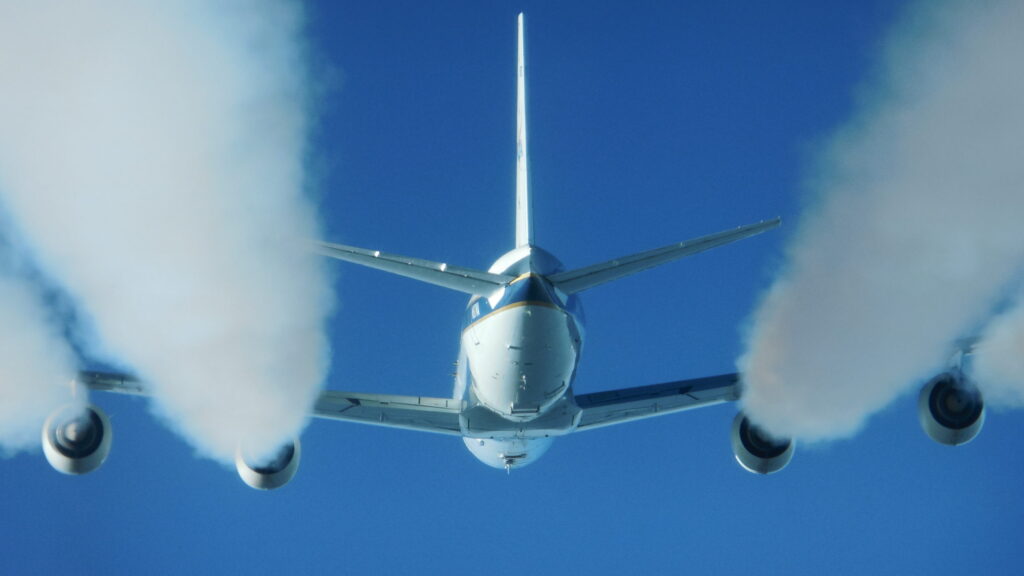
If you’ve ever looked up at a clear blue sky, you’ve likely seen a jet tracing a sharp white line behind it. These thin ribbons, known as airplane contrails, might look like harmless clouds or smoke. But have you ever wondered what actually creates them—and whether they affect our planet’s climate?
Understanding how these sky trails form and their surprising environmental footprint offers a fascinating look into atmospheric science.
How Do Airplane Contrails Form?
Contrails are essentially human-made clouds. Aircraft engines emit hot, moisture-rich exhaust gas. When this warm vapor meets the freezing temperatures of the upper atmosphere—usually at cruising altitudes where temperatures drop below -40^\circ\text{C}—the moisture rapidly cools and condenses around soot particles into tiny ice crystals.
When millions of these ice crystals cluster together, they become visible from the ground as a long white stripe.
Why Do Some Contrails Disappear While Others Spread?
Not all contrails act the same way. Their lifespan depends heavily on the surrounding weather conditions:
- Short-Lived Contrails: If the surrounding air is dry, the ice crystals quickly sublimate back into invisible vapor. The white line disappears within seconds or minutes.
- Persistent Contrails: If the air is extremely cold and saturated with ice moisture, the trail remains intact. As high-altitude winds push against it, the narrow line expands, eventually turning into a thin, spread-out cirrus cloud.
The Climate Puzzle: Do Airplane Contrails Warm or Cool the Earth?
The relationship between contrails and global temperatures is a subtle balancing act:
- The Cooling Effect: During the day, white contrail clouds act like a shield, reflecting a small fraction of incoming sunlight back into space.
- The Warming Effect: Simultaneously, these ice-crystal clouds trap outgoing infrared heat radiated from the Earth’s surface, preventing it from escaping into space and sending a portion of that heat back down.
When scientists measure both forces, the net result tilts toward warming. Contrails and contrail-induced cirrus clouds trap more outgoing thermal heat than the sunlight they reflect.
Contrails vs. Carbon Dioxide: What’s the Catch?
Research highlighted by NASA underscores a surprising detail: in key assessments like 2018 climate forcing benchmarks, contrail cirrus represented one of the single largest warming components linked to aviation—even exceeding the effective radiative forcing of aviation’s \text{CO}_2 emissions at that specific time snapshot.
Does this mean a white sky trail is instantly worse than burning jet fuel? Not quite.
- \text{CO}_2 stays in the atmosphere for hundreds of years, causing cumulative long-term warming.
- Contrails are short-lived phenomena that depend on real-time flight paths, atmospheric humidity, and whether a flight occurs during the day or night.
- While contrail climate impact carries ongoing scientific uncertainties due to these variables, researchers continue to study smart routing strategies—like slightly shifting flight altitudes to avoid atmospheric zones prone to persistent contrail formation.
What seems like simple sky art is actually a dynamic atmospheric event playing a complex role in atmospheric science.