
Can Fish See Air the Way We See Water? The Fascinating Physics Behind Fish Vision
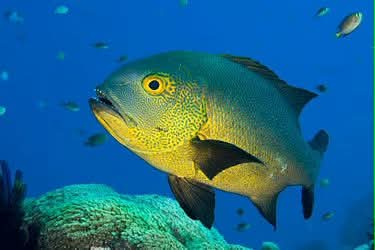
Have you ever stood by a lake and looked into the water to watch fish swimming? We can easily spot underwater objects even if they seem slightly shifted. Have you ever wondered about the reverse?
Does a fish looking up from underwater see the air and sky the way we see water?
The short answer is no. To a fish, the world above looks radically different, distorted, and complex.
Let us explore the physics and biology that explain how fish actually see our world from beneath the surface.
1. The Physics of Light: Refraction and Snell’s Law
To understand a fish’s vision, we must first look at how light moves through different environments. Light travels at varying speeds depending on the medium:
Air has a lower refractive index (roughly 1.00).
Water is denser with a higher refractive index (roughly 1.33).
Light rays bend away from their original path when crossing from water into air.
Looking down into the water allows us to see underwater objects with clarity. Conversely, light moving from dense water into light air bends dramatically, changing how fish view the world above.
2. “Snell’s Window”: A Fish-Eye View of the Sky
Because light bends at the surface, a fish cannot see a full horizon. Instead, optics squeeze its view into a circular cone known as Snell’s Window. Dutch physicist Willebrord Snellius first explained this optical rule.
Here is how Snell’s Window changes the perspective:
Compressed World: Light compresses the full 180^\circ view above the surface into a bright circle of about 97^\circ.
Distortion at the Edges: Objects directly overhead appear relatively clear. However, objects near the shore or horizon look squished, stretched, and distorted.
Mirrored Surroundings: Outside this bright circle, fish cannot see above the water at all. Instead, Total Internal Reflection turns the remaining surface into a mirror that reflects the aquatic bottom.
3. Eye Biology: Designed for Water, Not Air
Even without light distortion, a fish’s eye is biologically built for aquatic environments:
Spherical Lenses: Humans have relatively flat corneas and flexible lenses. On the other hand, fish possess rigid, perfectly spherical lenses that protrude forward. This shape provides the strong focusing power needed to bend underwater light.
Nearsightedness in Air: The eye lens of a fish works best underwater. Light traveling through air focuses in front of the retina rather than directly on it. Consequently, fish become shortsighted (myopic) when looking at objects above the waterline.
Key Takeaways
Human eyes see water clearly because light maintains a direct path.
Refraction warps the land above, forcing fish to view air through a tight circular window.
Total Internal Reflection turns the rest of the surface into an internal mirror past the 48.6^\circ critical angle.
Biological limitations make objects in the air look blurry and out of focus to fish.
So, the next time you cast a fishing line or look into an aquarium, remember that the fish sees you as a distorted figure floating inside a glowing sky-window!