The Secret Science Behind Sloth Slow Motions: Genius
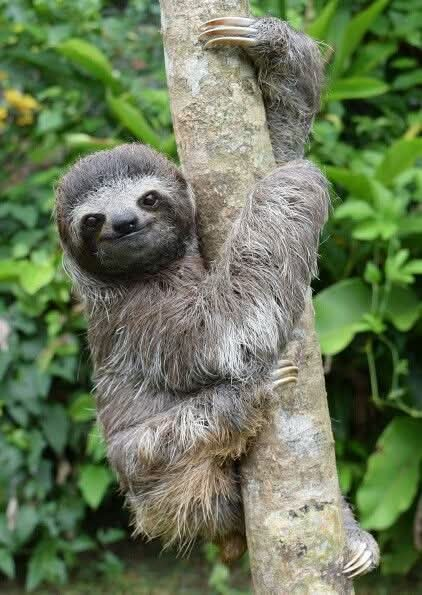
When you think of a sloth, the image that immediately springs to mind is a sleepy, smiling creature hanging upside down from a rainforest branch. Moving at an average speed of just 0.25 kilometers per hour (0.15 mph) and sleeping up to 10 to 15 hours a day, sloths have built a global reputation as the ultimate icons of laziness.
But here is the plot twist: sloths aren’t lazy. In fact, their extreme slowness is a masterclass in sloth science evolution and survival strategy.
Let’s dive into the fascinating bio-mechanics, metabolic tricks, and physical adaptations that make these peaceful tree-dwellers one of nature’s most successful evolutionary marvels.
1. The Low-Calorie Diet: Powered by Leaves
To understand why sloths move so slowly, you have to look at what is on their dinner plate. Sloths are folivores, meaning their diet consists almost entirely of tree leaves.
While leaves are abundant in the canopy, they present two major challenges:
Low Nutritional Content: Leaves yield very little usable energy or calories compared to fruits or meat.
High Toxicity and Fiber: Tree leaves are loaded with tough cellulose and chemical toxins meant to deter herbivores.
To survive on a diet with practically zero energy payoff, sloths had to adapt. Instead of searching for higher-energy foods, they drastically scaled back their energy consumption.
2. A One-Month Digestion Process
Did you know that a single leaf can take up to 30 days for a sloth to digest?
Sloths possess a complex, multi-chambered stomach similar to that of a cow. Their stomach relies on specialized gut bacteria to slowly break down tough cellulose via bacterial fermentation. Because this fermentation process moves at a crawling pace, a sloth’s stomach is almost always full.
In fact, at any given time, up to one-third of a sloth’s total body weight consists of digesting leaf matter inside its belly!
3. The Lowest Metabolic Rate of Any Mammal
To stay alive on such a calorie-scarce diet, sloths operate on an ultra-low metabolic rate. It is nearly 40% to 50% lower than other mammals of similar size. This unique feature plays a big role in sloth science evolution.
Because running, jumping, and quick reflexes burn calories rapidly, sloths simply removed those actions from their routine. Every single movement—from reaching for a neighboring branch to turning their head—is executed with deliberate, calculated slowness to conserve precious energy.
Additionally, unlike most mammals that expend metabolic energy to regulate internal body temperature, sloths are heterothermic. Like reptiles, they regulate their temperature environmentally. They bask in the sun to warm up and retreat to the canopy shade to cool down.
4. Built to Hang: Tendons Over Muscles
Holding yourself on a tree branch for hours requires significant muscle power. However, sloths do not rely on muscle strength for hanging.
Building and maintaining muscle tissue requires substantial metabolic energy. Consequently, sloths have 30% less muscle mass than other animals of comparable size. To stay suspended without exhausting themselves, they rely on a unique mechanical feature.
Automated Tendon Latching: A sloth’s hands and feet feature specialized tendons that automatically lock their long, curved claws into position around a branch.
Zero Energy Grip: The weight of their hanging body pulls the tendons tight, locking their grip effortlessly. It requires zero active muscle effort to hang upside down. In fact, this mechanism is so effective that sloths sometimes remain hanging from branches even after passing away from old age.
5. Upside-Down Anatomy: Internal Anchors
If a human hung upside down for hours, gravity would shift their internal organs toward their chest. This would press against the lungs and make breathing difficult.
So how do sloths manage it all day?
Sloths have evolved fibrinous adhesions—tough connective tissue anchors—that secure their internal organs (such as the liver, stomach, and kidneys) directly to their ribcage. These biological anchor points prevent their organs from sliding downward. This keeps their lungs completely free of pressure while hanging upside down.
6. That Signature Smile: Is It Really Happiness?
One of the most charming characteristics of a sloth is its sweet, perpetual smile. But science reveals a surprising truth: sloths aren’t actually smiling.
What looks like a cheerful expression is simply the natural bony structure of their face and muscle layout. A sloth’s facial structure remains unchanged whether it is relaxed, sleeping, hungry, or facing a predator. That iconic smile is built-in camouflage that makes them look perpetually calm to the outside world.
The Verdict: Slowness as a Superpower
Sloths prove that survival does not always require speed, strength, or high energy. By slowing down their metabolism, developing automated gripping mechanisms, and conserving every calorie, sloths have thrived in rainforest canopies for millions of years. Understanding sloth science evolution shows how slowness can be a true biological superpower!